01
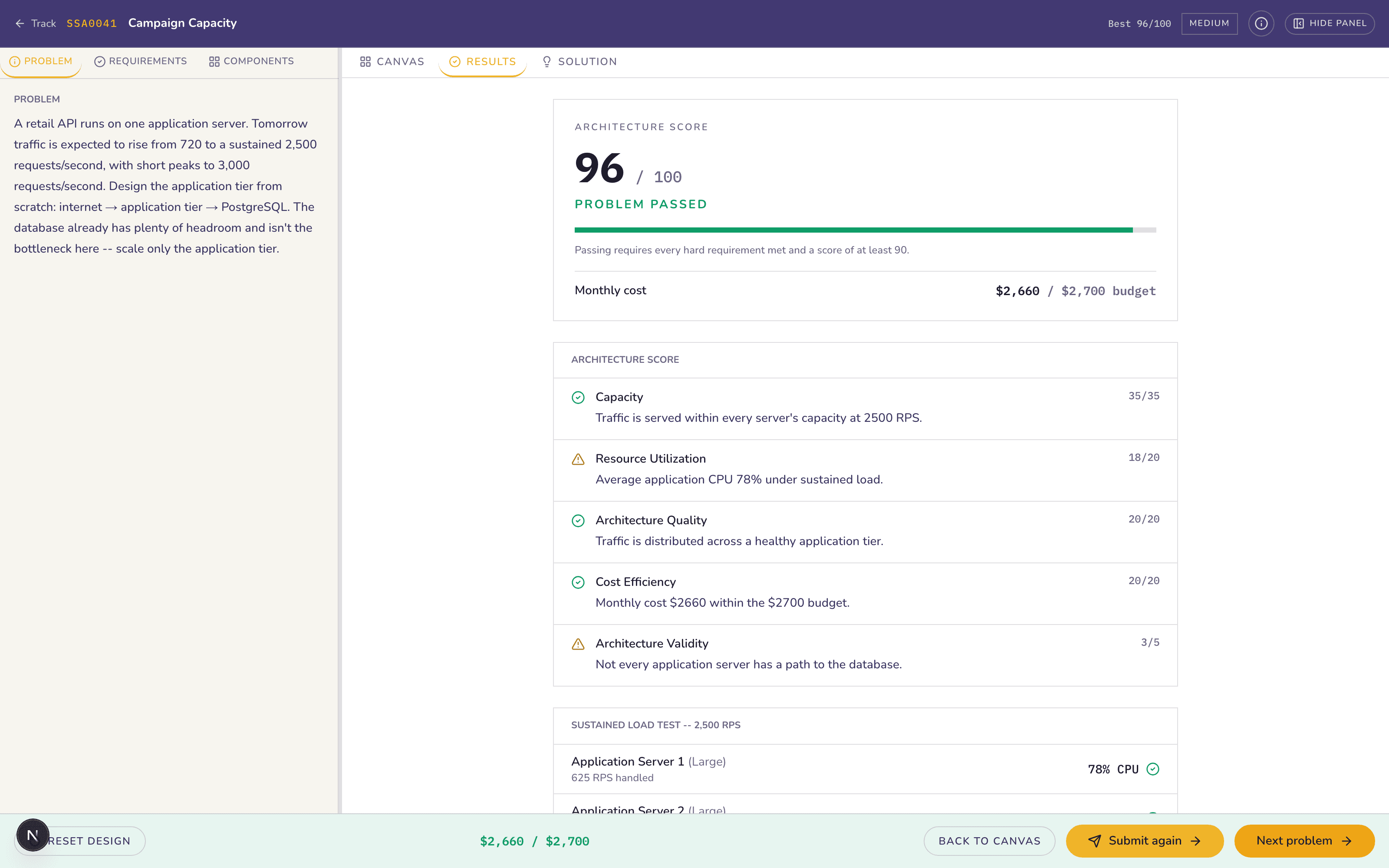
Place and connect components
Start with the building blocks, arrange the architecture, and connect the request path.
Every submission runs through an actual capacity simulator, not a quiz, not a whiteboard.
Roadmaps - Select track
Every path is built from the same real problems, not lectures.
Real systems work, practiced through production-style incidents.
Real systems work, practiced through production-style incidents.
Real systems work, practiced through production-style incidents.
Real systems work, practiced through production-style incidents.
The hands-on approach, learning system design by building and testing architectures, is awesome. Something unique, not just another DSA platform!
This is LeetCode for system design. Super useful before interviews.
I was practicing system design, particularly HLD, for interviews, and this is a game changer.
How it works
Design Canvas
Drag load balancers, application servers, databases, caches, queues, and CDNs onto a canvas and wire them together; every component has the real config fields an actual system has (instance size, routing algorithm, replication, TTLs), not a generic box with a label on it.
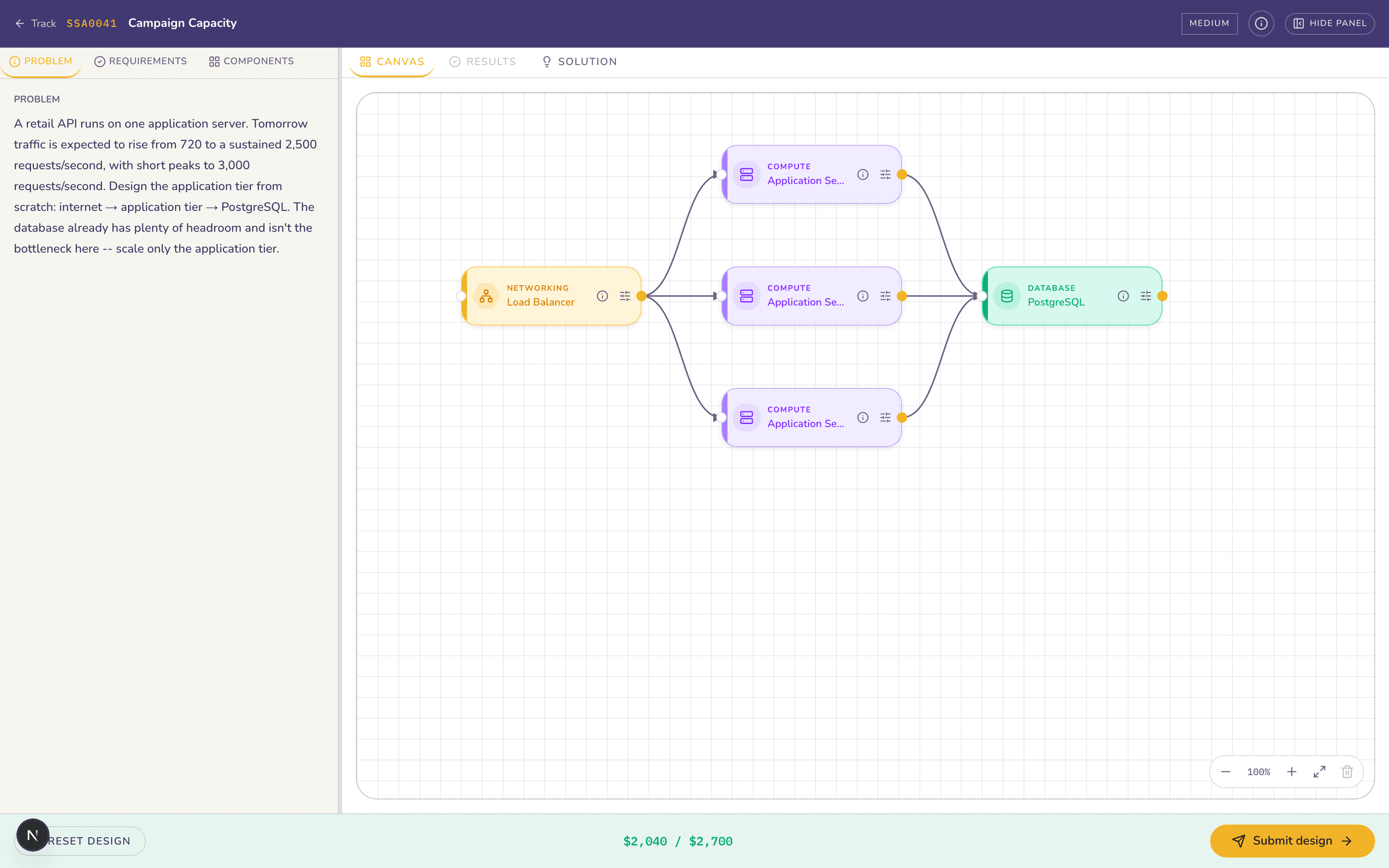
Simulation Engine
Every submission runs against an actual capacity, latency, and cost simulator; not a checklist. It tells you exactly which server is overloaded at the current traffic split, what your p95 looks like, and whether you're over budget, the same way a real design review would.